
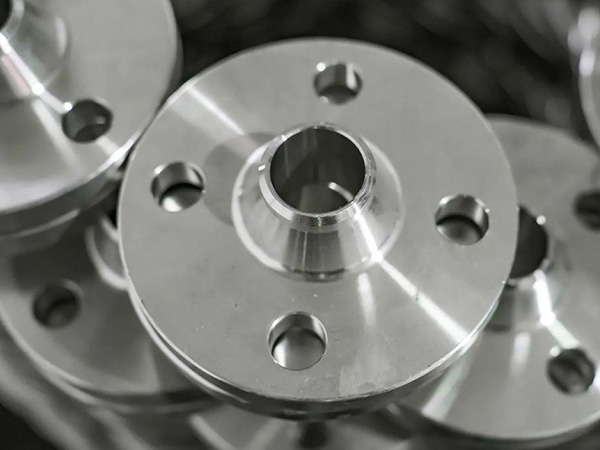
Blind Flange
A blind flange,also known as a blank flange,is a solid disc-shaped pipeline fitting without any central bore or opening.It is specially designed to completely seal the end of a pipe system,blocking fluid flow inside the pipeline permanently or temporarily.Different from connecting flanges such as socket weld and threaded flanges,blind flanges do not connect two pipes together.Instead,they serve as an end closure to isolate pipelines,equipment branches and pressure vessels.
Manufactured complying with international standard ASME B16.5,blind flanges are available in comprehensive pressure ratings including Class 150,300,600,900,1500 and 2500.Their size range covers full NPS specifications from small diameter to large bore pipelines.Standard face types mainly include Raised Face(RF),Flat Face(FF)and Ring Type Joint(RTJ)to match corresponding mating flanges.Bolt holes around the outer edge remain consistent with matched flanges,ensuring tight assembly with gaskets through bolt fastening.
Common raw materials include carbon steel A105,stainless steel F304,F316,alloy steel and duplex steel.With integral solid structure,blind flanges own outstanding pressure-bearing capacity,structural strength and sealing stability.They can withstand high temperature,high pressure and harsh corrosive working conditions stably.No internal flow channel avoids medium leakage fundamentally,providing reliable isolation performance for pipeline terminals.
Blind flanges are extensively applied in petrochemical engineering,oil and gas transmission,power station piping,chemical processing,water treatment and industrial mechanical systems.They are widely used for pipeline end sealing,branch line isolation,equipment maintenance isolation and future pipeline expansion reservation.Easy installation and convenient disassembly allow quick pipeline maintenance and system modification.
With excellent durability and long service life,blind flanges play an irreplaceable role in industrial pipeline safety control.Proper material selection and precision machining guarantee stable sealing under complex operating parameters.It is one of the most essential pressure-containing components ensuring safe operation of overall pipeline networks.
 Home
Home Product
 Contact