
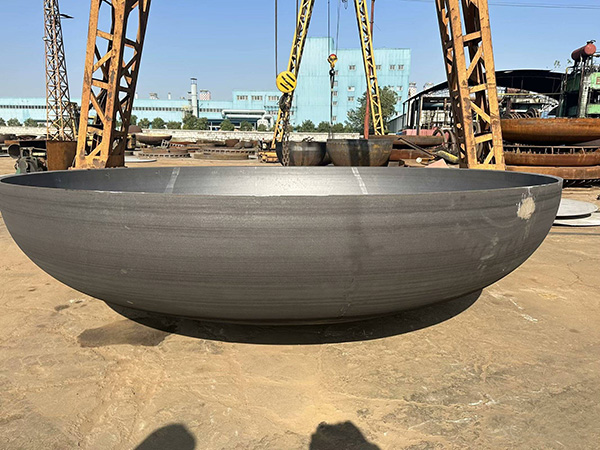
Vessel Head
A vessel head(also referred to as a dished end,head,or end closure)is a critical component that seals the open ends of cylindrical pressure vessels,providing structural integrity an..
Related recommendation:
TEL : +8615933281888
DESCRIPTION
A vessel head(also referred to as a dished end,head,or end closure)is a critical component that seals the open ends of cylindrical pressure vessels,providing structural integrity and containing internal or external pressure loads.It is one of the most vital and highly engineered parts of pressure vessels,directly influencing safety,performance,and cost.Vessel heads are widely applied in industries including petroleum,chemical,energy,pharmaceutical,food&beverage,and nuclear power.
Core Functions
Pressure Containment:Withstands internal/external pressure and distributes stress evenly.
Sealing:Isolates internal media(gases/liquids)from the external environment.
Structural Support:Forms a rigid end structure,enhancing overall vessel stability.
Space Optimization:Curved profiles maximize internal volume while minimizing height compared to flat ends.
Common Types&Characteristics
1.Hemispherical Head
Shape:Half-sphere with uniform curvature.
Features:Optimal stress distribution,minimal thickness for high pressure,excellent fatigue resistance.
Pros:Highest pressure capacity,material-efficient.
Cons:Complex forming,high cost,deep profile.
Applications:High-pressure reactors,gas storage,cryogenic tanks.
2.2:1 Ellipsoidal(Elliptical)Head
Shape:Semi-ellipse with major axis twice the minor axis(standard 2:1 ratio).
Features:Smooth stress transition,moderate height.
Pros:Balanced strength and economy,widely used.
Cons:Slightly thicker than hemispherical heads.
Applications:Boilers,heat exchangers,mid-to-high pressure vessels.
 Home
Home Product
 Contact
ABOUT US
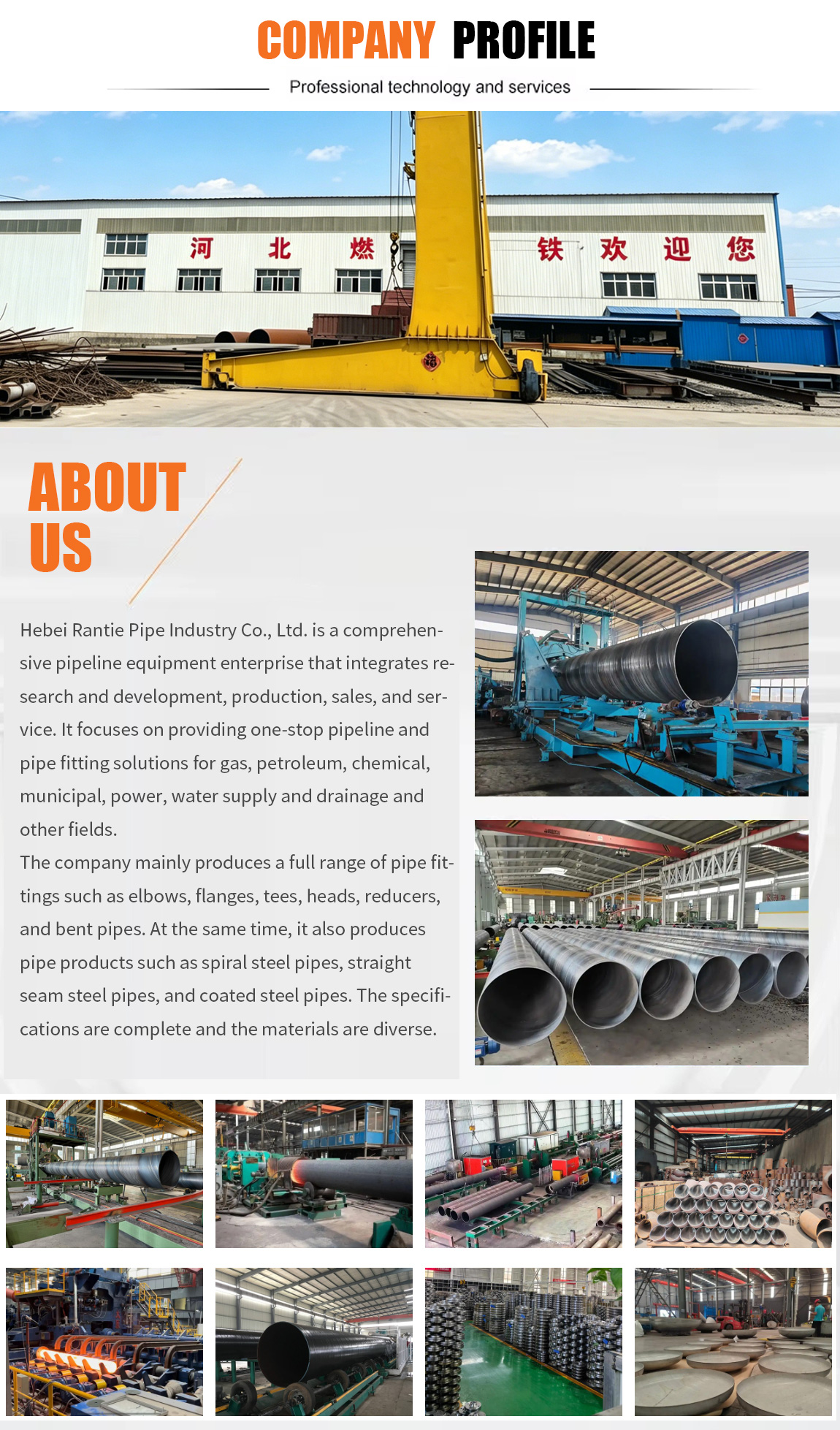
The company mainly produces a full range of pipe fittings such as elbows, flanges, tees, heads, reducers, and bent pipes. At the same time, it also produces pipe products such as spiral steel pipes, straight seam steel pipes, and coated steel pipes. The specifications are complete and the materials are diverse. It can be produced according to national standards, industry standards, and customer customization needs to meet the pressure, anti-corrosion, and connection requirements of different working conditions.
DETAILS
NAVIGATION
CONTACT US
E-mail :228676355@qq.com
TEL : 8615933281888
ADD : Mengcun Hui Autonomous County, Cangzhou City, Hebei Province, China